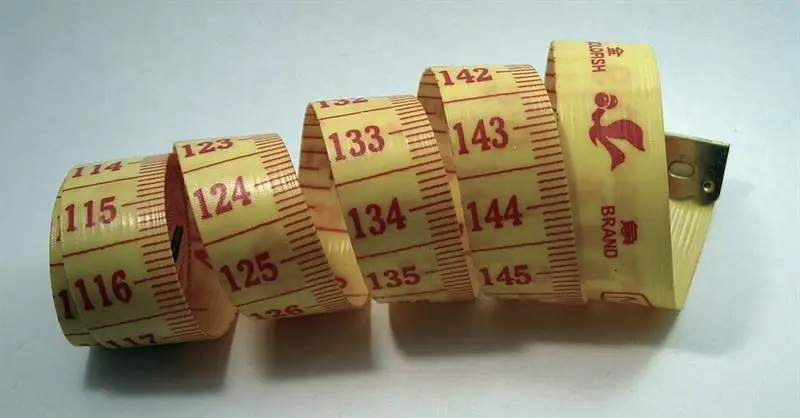
How to read and use a feeler gauge (and check its accuracy)
Each feeler gauge leaf is stamped with its thickness. Read the number, find the leaf that slides through with a light drag, and check the set's accuracy.
Material guide
What works on steel and stainless: the right drill bit and speed, cutting tool, epoxy, screws and rust prep, plus how to handle hot chips and sparks.

Steel is iron with a little carbon. Plain steel is strong, cheap and magnetic, and it rusts. Stainless steel adds chromium, often with nickel, so it resists rust.
Steel is tricky because it's harder than wood and holds heat. A bit spun too fast gets hot, dulls and stops cutting. Stainless is worse. If the bit rubs instead of cuts, the metal hardens right under it. The fix is a sharp bit, slow speed, steady pressure and cutting oil.
Cutting and grinding throw hot chips and sparks. Fresh edges are sharp as a knife. And bare steel starts to rust soon after you cut or sand it, so plan to prime it.
Center-punch the spot so the bit won't wander. Use a sharp HSS bit at low speed with cutting oil: about 1,500 rpm for 1/4 in in mild steel. For stainless, use cobalt, go slower, and keep steady pressure so the bit cuts instead of rubbing.
What to use: Cobalt bit set + cutting oil
For one or two cuts, use an angle grinder with a cut-off wheel and the right guard. For long, straight cuts, a metal-cutting circular saw is cleaner. Use a hacksaw with a fine-tooth blade for small jobs, and tin snips for thin sheet.
What to use: Angle grinder + Type 1 cut-off wheel and guard
Use a two-part steel epoxy. Clean off grease, then rough up both surfaces with a file or coarse sandpaper. J-B Weld sets in 4 to 6 hours and cures in 15 to 24. Let it cure fully before you load the joint.
What to use: Two-part steel epoxy
For thin sheet steel and metal studs, use self-drilling screws with a drill point rated for the thickness. For thicker steel, drill and tap the hole for a machine screw, or bolt through. Rivets join thin sheets for good.
What to use: Self-drilling screws for sheet; bolts or tapped holes for plate
Wash off grease first. Then remove loose rust, scale and old paint with a wire brush, sandpaper or a power tool, and sand glossy paint so primer can grip. Prime bare steel soon after, before new rust starts.
What to use: Wire wheel or flap disc, then rust primer
Each feeler gauge leaf is stamped with its thickness. Read the number, find the leaf that slides through with a light drag, and check the set's accuracy.
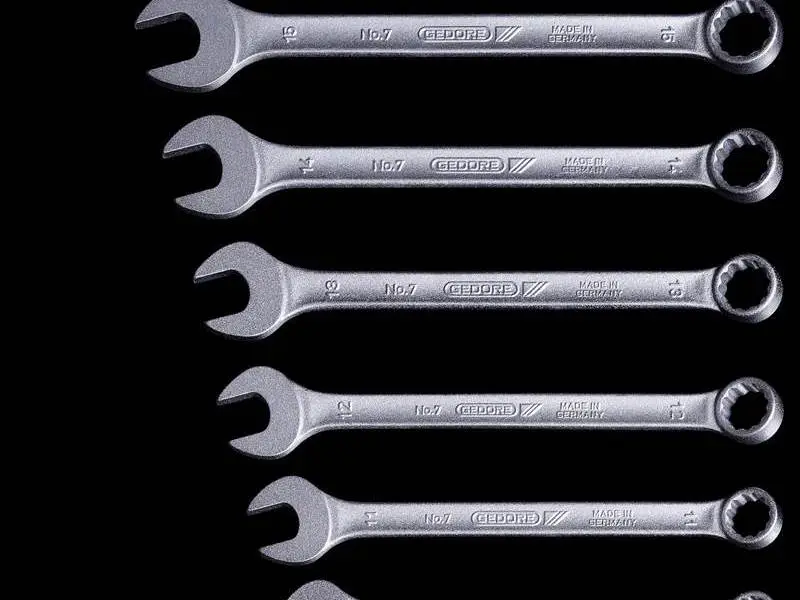
Set the handle, pull slowly at a right angle, stop at the click. How click, beam and digital torque wrenches work, plus storage and calibration rules.
A titanium-coated knife is steel under a very thin coat, so you sharpen it like steel. Use a stone or hand sharpener at 15 to 20 degrees; spare the flats.

Empty it, sort by job, give every tool one home, and keep heavy tools low. A simple toolbox system for hand boxes, rolling chests and stack-up kits.