Material guide
Aluminum
What works on aluminum: drill speed, the right saw blade, epoxy prep, fasteners that won't corrode it, and why its dust must never mix with steel dust.
Quick facts
- Weight
- About one-third the density of steel (2.7 g/cm³)
- Melting point
- About 1,220°F (660°C) for pure aluminum
- Drill speed (HSS bit)
- About 250 ft/min, roughly 3,800 rpm for a 1/4 in bit
- Best blade
- Carbide-tipped blade made for aluminum (non-ferrous)
- Safe fasteners
- Aluminum, 300-series stainless or zinc-coated where it gets wet
- Dust rule
- Never mix aluminum and steel dust: with rust, it can react and heat up
Aluminum is a light, soft metal. It weighs about a third as much as steel, and it doesn't rust red. Instead, it grows a thin oxide skin that protects it. You'll find it in ladders, trim, window frames, boat parts, and tubing.
Being soft makes it fast to drill and cut. It still needs the right edge: a sharp bit, and a saw blade made for aluminum.
Aluminum has two quiet traps. First, it corrodes when it touches some other metals in the wet. A bare steel screw in wet aluminum can eat the metal around it. Second, its dust is a fire hazard. Mixed with rusty steel dust in a vacuum, it can react and get very hot.
So keep its tools and its dust apart from steel, and pick fasteners that suit it.
Drill into aluminum
Use a sharp HSS twist bit. Aluminum is soft, so it drills fast: about 3,800 rpm for a 1/4 in bit at most. Use cutting fluid to keep the bit cool, and back out often on deep holes to clear the flutes. Clamp the work.
What to use: HSS twist bit + cutting fluid
Guides
- How to drill aluminum without grabbing or gumming (coming)
- How to drill into metal: speed, pressure, and the right bit (coming)
- Step bit vs twist bit for sheet metal (coming)
- Tap drill chart for DIY (SAE and metric) (coming)
Cut aluminum
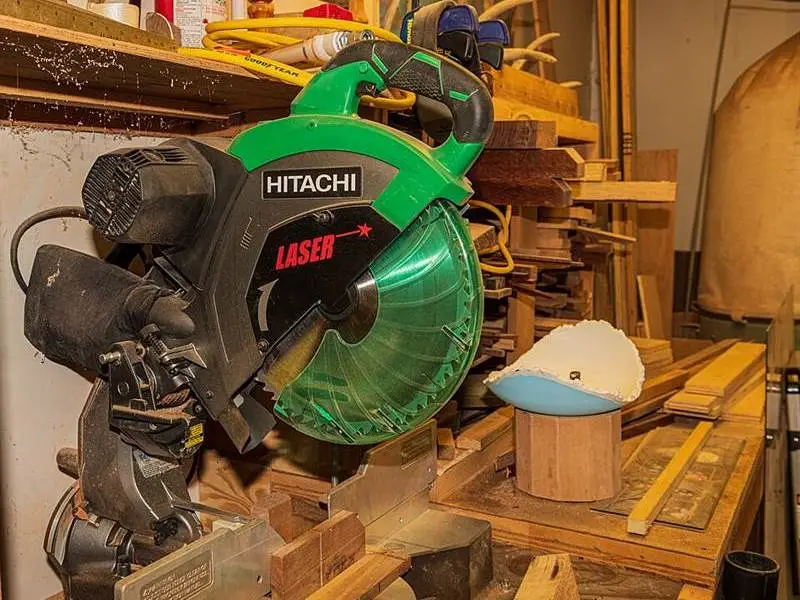
Use a carbide-tipped blade made for aluminum on a miter or circular saw, if the saw's manual allows it. Clamp the piece and rub stick wax on the teeth before the cut. Don't use a non-ferrous blade on steel. For thin sheet, tin snips work. A hacksaw handles small tubes and bars.
What to use: Non-ferrous carbide blade on a miter saw
Guides
- How to cut aluminum: sheet, tube, angle and bar
- Can a miter saw cut metal or aluminum?
- What is a portable band saw used for?
- How to cut metal at home: grinder, recip saw, chop saw, or snips (coming)
- Circular saw blade guide: tooth count, kerf, and which blade for what (coming)
- Tin snip colors explained (red, green, yellow) (coming)
Glue aluminum
Use a two-part metal epoxy. Aluminum grows a thin oxide skin in air, so clean it with a degreaser and rough it up with coarse sandpaper just before you glue. Clamp until the epoxy sets.
What to use: Two-part metal epoxy
Guides
- Glue aluminum to aluminum (prep is 90% of it) (coming)
- J-B Weld vs epoxy vs welding: when glue is enough (coming)
- Does Gorilla Glue work on metal? (coming)
- Glue glass to metal: UV glue vs epoxy vs silicone (coming)
Screw or anchor into aluminum
Use aluminum, 300-series stainless or zinc-coated fasteners. Where the joint gets wet, keep bare steel and copper off the aluminum, or it will corrode. Use self-drilling or sheet metal screws in thin sheet, and aluminum rivets for a permanent joint.
What to use: Stainless or aluminum screws and rivets
Guides
- Stainless screws in aluminum: the corrosion problem and the fix (coming)
- Self-tapping vs self-drilling screws (not the same thing) (coming)
- Pilot hole sizes for sheet metal screws in steel and aluminum (coming)
- How to remove a rivet (and pick the right pop rivet size) (coming)
Sand or finish aluminum
Use sandpaper or a flap disc kept only for aluminum. Never reuse one that has touched steel. Pick a sander with dust pickup, clean up dust daily, and don't blow it around with compressed air.
What to use: Sander with dust pickup, aluminum-only abrasives
Guides
- Sand aluminum without clogging the paper (coming)
- Sandpaper grit chart: which grit for which job (coming)
Safety basics
- Wear safety glasses. Aluminum chips are sharp and fly off fast.
- Keep aluminum and steel dust apart. Clean the vacuum or collector between metals. Mixed with rust, aluminum dust can react and give off heat.
- Don't use a shop vac on fine aluminum dust. The Aluminum Association says standard shop vacs can raise the fire risk.
- Clamp the work. A blade or bit can grab a thin part and throw it.
Sources
- Aluminum and aluminum alloys, J.R. Davis (ASM International, via NIST): density and melting point
- EML2322L Drilling speeds and feeds: HSS surface speed for aluminum (250 ft/min), rpm formula, pecking deep holes (University of Florida, MAE Design Lab)
- D1080N medium aluminum cutting circular saw blade (Diablo)
- J-B Weld Original twin tube: bonds metal; clean, degrease and roughen with file or coarse sandpaper (J-B Weld)
- Aluminum structures FAQs: Specification for Aluminum Structures M.7.1, contact with other metals (Aluminum Association)
- Aluminum dust in automotive collision repair: combustibility, dust pickup, no compressed air, never mix steel and aluminum dust, thermiting (Aluminum Association)
- General construction products catalog: Teks self-drilling screws (ITW Buildex)
- OSHA 29 CFR 1910.133: eye and face protection