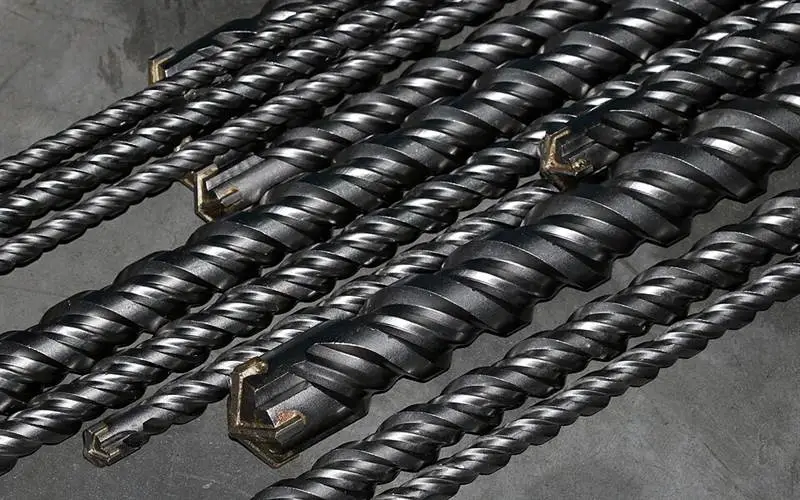
Best drill bit for hardened steel: cobalt or carbide?

In this guide
- The short list: which bit for which steel
- How the planned Bit Bench test will work
- What "hardened steel" means, and why it matters
- Cobalt vs carbide for hardened steel
- Each pick in more detail
- How to choose a drill bit for hardened steel
- How to drill hardened steel
- If the bit stops cutting
- When to use a different tool
- What you'll need
- Questions people ask
The short list: which bit for which steel
These picks come from what makers publish about their own bits. There's no single overall winner, because the right bit depends on how hard your steel is.
| What you're drilling | Bit type | Example | Why it fits |
|---|---|---|---|
| Grade 5 and 8 bolts, axles, heat-treated brackets | Cobalt M35 | Irwin cobalt alloy (3016024 and sizes) | Marketed for hardened steel; 135° split point; 65.5 to 67 HRC |
| Same, in a drill press, many holes | Cobalt M42 | Bosch Cobalt M42 (CO series) | 8% cobalt; Bosch claims 10X the life of standard bits |
| Stainless and hard alloys, hand drill | Cobalt with pilot point | DeWalt Elite cobalt pilot point | Starts on contact without a pilot hole |
| Files, pins, dies, tool steel | Carbide-tipped die drill | Drill America carbide-tipped die drill | Sold for hardened steel, dies and armor |
| Same, highest hardness | Solid carbide | M.A. Ford Hi-Roc | Rated for 42 to 65 HRC |
Planned bench test: 1/4-inch holes in a Grade 8 bolt, 4140 pre-hard plate and an old mill file, with the same drill press, oil and feed, 3 bits of each type, up to 40 holes per bit. Results will be added here when the test is done.
To match a bit to other metals, use the drill bit selector. More guides are in our drilling hub and on the steel material page.
How the planned Bit Bench test will work
The test will drill three levels of hard steel with each bit type in a drill press, count holes until a bit stops cutting, time each hole and photograph the tips. The raw numbers will be published with the method. Until then, the picks above rest on the makers' published specs.
What "hardened steel" means, and why it matters
Hardened steel has been heated and quenched so it's much harder than plain mild steel. Hardness is measured on the Rockwell C scale (HRC). The higher the number, the harder the steel.
A drill bit can only cut steel that's softer than its own edge. That's the whole problem.
| Item | Typical hardness | Source |
|---|---|---|
| SAE Grade 5 bolt, 1/4 to 1 in | C25 to C34 | Portland Bolt |
| SAE Grade 8 bolt | C33 to C39 | Portland Bolt |
| Irwin M35 cobalt bit | About 65.5 to 67 HRC | Irwin |
| Range covered by M.A. Ford's Hi-Roc carbide drill | 42 to 65 HRC | M.A. Ford listing |
Most "hardened" parts you find at home are heat-treated bolts, axles and brackets. Those sit well below a cobalt bit's hardness. Files, hardened pins, chisels, saw plates and dies can be close to the bit's own hardness. That's where carbide comes in.
We file-tested five common "hardened" items, then had them checked on a Rockwell tester.
Cobalt vs carbide for hardened steel
| Cobalt (M35, M42) | Carbide (solid or tipped) | |
|---|---|---|
| What it is | High-speed steel with cobalt mixed in, all the way through | Tungsten carbide, much harder than steel |
| Best for | Heat-treated bolts, stainless, hard alloys | Through-hardened tool steel, dies, files |
| Hand drill? | Yes | Risky; it chips if it wobbles |
| Can you sharpen it? | Yes, on a bench grinder | Needs a diamond wheel |
| Cost | Moderate | High |
Cobalt is not a coating. Irwin says its cobalt bits are cobalt alloy steel through and through, and the gold color comes from a heat treatment. So you can sharpen one and keep the same cutting edge.
M35 vs M42
- M35 has 5% cobalt, per Irwin. It's a bit tougher, so it's the better pick for hand drilling.
- M42 has 8% cobalt, per Bosch. It holds its edge longer when hot, so it shines in a drill press.
Why not titanium or black oxide?
Titanium-nitride and black-oxide bits are regular HSS with a surface finish. They're fine in mild steel. On hardened steel, the coating wears through fast and the HSS under it dulls. See cobalt vs titanium vs black oxide bits for the full comparison.
Each pick in more detail
Cobalt M35 (Irwin cobalt alloy steel)
- What it is: a jobber-length M35 cobalt bit with a 135° split point.
- Good: Irwin markets it for hardened steel, alloys and stainless. The split point cuts walking at the start.
- Watch out: it still burns up if you run it fast and dry.
- Who it's for: drilling out bolts, axles and heat-treated brackets with a hand drill.
Cobalt M42 (Bosch Cobalt M42)
- What it is: an 8% cobalt jobber bit, sold from 1/16 to 1/2 inch.
- Good: Bosch claims 10X the life of standard bits, and lists stainless, cast iron and titanium.
- Watch out: more brittle than M35. Keep it straight.
- Who it's for: many holes in hard metal, ideally in a drill press.
Cobalt pilot point (DeWalt Elite)
- What it is: a cobalt bit with DeWalt's pilot point tip.
- Good: DeWalt says it's for stainless and other hard metals, and the tip starts without a pilot hole.
- Watch out: DeWalt doesn't list the cobalt grade on the page.
- Who it's for: one-off holes in hard metal when you can't center-punch well.
Carbide-tipped die drill (Drill America)
- What it is: a steel-bodied bit with a brazed carbide tip.
- Good: Drill America sells it for mold dies, hardened steel and armor.
- Watch out: the tip chips if the bit flexes or the work moves. Use a drill press.
- Who it's for: drilling a hardened pin, a die plate or a file you can't anneal.
Solid carbide (M.A. Ford Hi-Roc)
- What it is: a solid carbide drill with a 135° split point.
- Good: rated for hardened steel from 42 to 65 HRC.
- Watch out: the priciest option, and the most brittle. One wobble can snap it.
- Who it's for: the hardest steel, in a rigid drill press or mill.
How to choose a drill bit for hardened steel
- Test the steel with a file. If the file bites, start with cobalt. If it skates, go straight to carbide.
- Match the bit to your drill. Hand drill: cobalt M35. Drill press: M42 or carbide.
- Buy the size you need, plus a small pilot bit. A pilot hole eases the load on a big cobalt bit.
- Check the point. Look for a 135° split point, like Irwin and M.A. Ford use. It starts on contact and walks less on hard metal.
How to drill hardened steel
- Clamp the work. Use a vise or clamps. A bit that grabs can spin a part like a blade.
- Mark the spot. Center-punch it. If the punch won't dent the steel, that's your sign to use carbide.
- Use cutting oil. Keep the tip wet the whole time. No oil? See cutting oil substitutes.
- Push hard and steady. The bit must cut, not rub. Rubbing heats the tip and dulls it.
- Back out to clear chips on deep holes, then go back in.
- Stop if it squeals or smokes. Let it cool, check the tip, and sharpen or swap the bit.
For general metal drilling, see how to drill metal. Stainless steel has its own tricks; see how to drill stainless steel.
If the bit stops cutting
| Sign | Likely cause | Fix |
|---|---|---|
| Bit squeals and glows blue | Speed too high, no oil | Slow down, add oil, sharpen the bit |
| Bit spins but makes no chips | Steel is harder than the bit | Switch to carbide |
| Carbide tip chips | Work moved, or the drill flexed | Clamp tighter; use a drill press |
| Bit wanders off the mark | No punch mark, or a plain point | Punch the spot; use a split point or a drill bushing guide |
| Bit snaps in the hole | Too much side load | See how to remove a broken drill bit |
When to use a different tool
- Big holes in thick steel on site. A magnetic drill holds the bit rigid, which is what carbide needs.
- Making your own hard parts. Tool steel stock, like drill rod, is easiest to drill before you harden it.
- Broken taps and hardened studs. A machine shop can remove them with EDM (spark erosion) when no bit will.
What you'll need
- Cobalt bit (M35 or M42): For heat-treated bolts and hard alloys
- Solid carbide or carbide-tipped die drill: For through-hardened tool steel
- Drill press, or a drill guide: Carbide needs a rigid, straight feed
- Cutting oil: Cools the bit and carries chips out
- Vise or clamps: The work must not spin
- Center punch and a file: To mark the spot and test hardness
- Safety glasses or face shield: Carbide can shatter; chips are hot
Key takeaways
- A bit must be harder than the steel. Irwin's M35 cobalt bits are about 65.5 to 67 HRC, and they are cobalt steel all the way through, not coated.
- Grade 8 bolts are C33 to C39 on the Rockwell scale, per Portland Bolt. Cobalt handles that with low speed, steady pressure and oil.
- Fully hardened parts need carbide. M.A. Ford rates its Hi-Roc carbide drill for 42 to 65 HRC. Drill America sells carbide-tipped die drills for hardened steel and armor.
- Carbide is hard but brittle. Use it in a drill press or a rigid setup, never with hammer mode, and never a masonry bit.
- Black oxide and titanium-coated HSS bits are for mild steel. They dull fast on hardened steel.
Questions people ask
Can a cobalt drill bit go through hardened steel?
Through heat-treated steel like Grade 8 bolts, yes, if you go slow with oil and steady pressure. Irwin markets its M35 cobalt bits for hardened steel. Fully hardened tool steel is near the bit's own hardness, so use carbide there.
Is carbide or cobalt better for hardened steel?
Carbide for the hardest steel; cobalt for everything up to heat-treated bolts. Carbide stays sharp at higher hardness but chips if it wobbles. Cobalt is tougher and works in a hand drill.
Is M42 better than M35?
M42 has more cobalt (8%, per Bosch) than M35 (5%, per Irwin), so it holds its edge longer when hot. It's also a bit more brittle. For hand drilling, M35 is the safer pick. In a drill press, M42 lasts longer.
What drill bit do I need for a Grade 8 bolt?
A cobalt bit. Grade 8 bolts are C33 to C39 Rockwell. Center-punch the bolt, start with a small pilot bit, use cutting oil, and keep the speed low. A left-hand cobalt bit can sometimes back a broken bolt out.
Will a masonry bit drill hardened steel?
No. A masonry bit has a carbide tip, but its shape is made to chip stone with hammer action. On steel it rubs and heats up. Use a carbide bit made for metal.
How do I know if steel is hardened?
Try a file on a hidden spot. If the file bites, a cobalt bit will usually cut it. If the file skates without biting, the steel is hard; plan on carbide. A center punch that won't dent the surface is another sign.
Sources
- IRWIN support: cobalt bits are M35 (5% cobalt), about 65.5-67 HRC, cobalt alloy throughout, not coated
- IRWIN 3016024 3/8 x 5 in. cobalt alloy steel drill bit: for hardened steel, alloys, stainless; 135° split point
- Bosch Cobalt M42 drill bits: 8% cobalt, 10X life vs standard bits; stainless, cast iron, titanium
- DEWALT Elite Series 1/4 in. cobalt alloy steel pilot point drill bit: for stainless steel and other hard metals
- Drill America carbide-tipped die drills: for mold-making dies, hardened steel and armor
- M.A. Ford Hi-Roc Twister 200 solid carbide drill: hardened steel 42-65 HRC, 135° split point (distributor listing)
- Portland Bolt: strength requirements by grade (SAE J429 Grade 5 C25-C34, Grade 8 C33-C39)
- EML2322L Drilling speeds and feeds: HSS surface speeds and the rpm formula (University of Florida, MAE Design Lab)
- OSHA 29 CFR 1910.133: eye and face protection
Change log: Nov 6, 2026: Rewritten from the 2024 archive post. Fixed the old list that called HSS, cobalt and carbide 'types of hardened steel' (they are bit materials); added bit hardness from Irwin, bolt grades from Portland Bolt, carbide ratings, a how-to and the Bit Bench test plan.