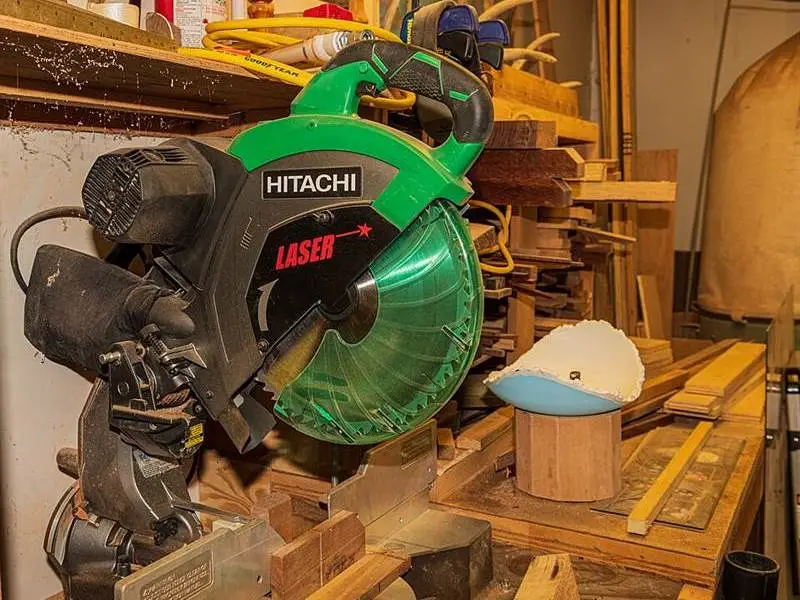
What size inverter do you need to run a circular saw?
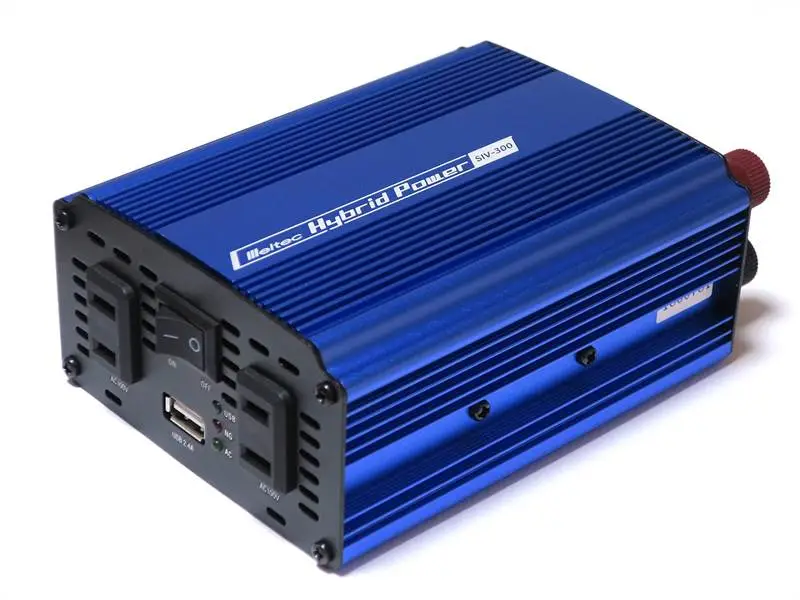
In this guide
Inverter size for a circular saw: the chart
| Saw and data source | Running watts | Extra watts to start | Continuous inverter (estimate) | Surge inverter (estimate) | 12 V battery draw while running |
|---|---|---|---|---|---|
| 7-1/4" circular saw (Lowe's chart) | 1,400 W | 2,300 W | 1,700 W | 4,100 W | ~137 A |
| Circular saw (Champion chart) | 1,500 W | 2,000 W | 1,800 W | 3,900 W | ~147 A |
Rule of thumb: for one 7-1/4-inch corded saw, buy a pure sine wave inverter with at least 1,800 W continuous and about 4,000 W surge. Go to 2,200 W continuous if you want to cover a 15 A saw at its nameplate limit.
Want to add a work light, a shop vac or a second tool? Use the inverter size calculator. It uses the same math as this chart. More power topics are in the electrical hub.
How to read the chart
- Running watts is what the saw pulls once the blade is up to speed. Wattage charts publish typical values. Your saw's label or manual is the better number.
- Extra watts to start is the short spike when the motor spins up. Charts list it as starting watts on top of running watts.
- Continuous is the inverter rating you need for steady use.
- Surge is the peak the inverter must hold while the saw starts.
- Battery draw is the DC current a 12 V battery must supply while the saw runs.
How we size it (the assumptions)
These are estimates, not test results. They match the inverter size calculator:
- Continuous = running watts × 1.2, rounded up to the next 100 W. The 20 percent margin keeps the inverter out of its limit during a hard cut.
- Surge = (total running watts + the biggest single startup extra) × 1.1, rounded up to the next 100 W. Only one motor starts at a time, so only the biggest extra counts.
- 12 V battery draw = running watts ÷ 12 ÷ 0.85. The 0.85 allows for about 85 percent inverter efficiency.
Worked example with Champion's numbers:
- Continuous: 1,500 × 1.2 = 1,800 W.
- Surge: (1,500 + 2,000) × 1.1 = 3,850, rounded up to 3,900 W.
- Battery draw: 1,500 ÷ 12 ÷ 0.85 ≈ 147 A.
Using your saw's nameplate
US tools list amps at 120 V. Multiply them: watts = amps × volts. DeWalt's DWE575, for example, has a 15 A motor. 15 × 120 = 1,800 W. That's the most it should draw, so it's a safe ceiling for the continuous rating. The nameplate doesn't list startup watts. Use a chart value or measure it. Our guide to measuring running and surge watts shows how.
Check the surge time, not just the surge number
A motor can take a moment to come up to speed. Samlex, an inverter maker, says some of its surge ratings hold for less than one second, which may not be enough to start a motor. Look in the spec sheet for how long the inverter can hold its surge rating. If the saw trips the inverter at every start, you need more surge or a soft-start saw.
Pure sine or modified sine?
Get a pure sine wave inverter for any tool with a motor. A brushed saw may run on modified sine, but it can run hotter and noisier. Saws with electronic speed control or soft start may not run right at all. Our guide to pure vs modified sine wave explains the difference.
The 12 V battery side
At 140 to 175 amps, one saw is a heavy load for a 12 V system.
- A single car starting battery drains fast and isn't built for deep discharge.
- Use a deep-cycle battery bank sized in the inverter maker's manual.
- Use the cable size, fuse and connection steps in that same manual. We don't cover wiring here.
Easier options
- Go cordless. A cordless saw runs off its own battery. Charging those batteries needs far less power. See charge tool batteries in the car.
- Use a portable power station with a high enough surge rating. See run power tools from a power station.
- Use a generator for all-day cutting. See what size generator do I need.
For running and starting watts of other tools, see the power tool wattage chart. New to circular saws? Start with what is a buzz saw.
Calculator
Inverter size calculator for power tools →
Same formulas as this page, for your own numbers.
What you'll need
- Your saw's nameplate or manual: Amps or watts, 120 V
- Pure sine wave inverter: Continuous and surge ratings as in the chart
- Battery bank sized for the draw: Per the inverter manual
- Cables and fuse from the inverter maker's spec: Installed per the manual
Key takeaways
- Published wattage charts list a 7-1/4-inch circular saw at 1,400 to 1,500 W running, plus 2,000 to 2,300 W extra to start.
- Our sizing: continuous = running watts × 1.2, rounded up to the next 100 W. Surge = (running + startup extra) × 1.1. These are estimates.
- That gives about 1,800 W continuous and 3,900 to 4,100 W surge. Sizing from a 15 A nameplate (1,800 W) gives 2,200 W continuous.
- A 12 V battery supplies about watts ÷ 12 ÷ 0.85 in amps: roughly 140 to 175 A for one saw. Follow the inverter manual for cables and fuses.
- Check how long the surge rating lasts. Some inverters hold surge for under a second, which may not start a saw.
Questions people ask
Can a 1,000 watt inverter run a circular saw?
No, not a corded 7-1/4-inch saw. Wattage charts list these saws at 1,400 to 1,500 W just to run, before the startup surge. The inverter will shut down or the saw will stall.
Can a 2,000 watt inverter run a circular saw?
Often, if its surge rating is about 4,000 W and holds long enough for the motor to start. 2,000 W continuous covers our 1,800 W estimate. It won't cover the 2,200 W figure if your 15 A saw really pulls its full nameplate.
Do I need a pure sine wave inverter for a circular saw?
It's the safe choice. Many brushed saws run on modified sine wave, but they can run hotter and louder. Tools with electronic speed control or soft start may not run right on it. See pure vs modified sine wave.
How many watts does a circular saw use?
Wattage charts from Lowe's and Champion list 1,400 to 1,500 W running for a 7-1/4-inch saw. The nameplate limit for a 15 A, 120 V saw is 1,800 W. The real draw depends on the saw, the blade and how hard you push.
How long can I run a circular saw on a car battery?
Not long. At roughly 140 to 175 A, a single car battery drains fast, and starting batteries aren't made for deep discharge. Use a deep-cycle battery bank sized by the inverter maker, or a cordless saw.
Is it easier to just use a cordless saw?
Usually. Charging tool batteries takes far less power than running a corded saw, so a much smaller inverter can do it. Check the charger label for its watts. See charge tool batteries in the car.
Sources
- Portable generator wattage chart: circular saw 7-1/4 in., running and additional starting watts (Lowe's)
- Generator wattage chart flyer: circular saw running and starting watts (Champion Power Equipment)
- DWE575 7-1/4 in. lightweight circular saw: 15 A motor (DeWalt)
- Samlex inverter FAQ: motor surge duration and surge rating under 1 second (reposted by CARiD)
- Carbon monoxide information center (U.S. Consumer Product Safety Commission)
Change log: Nov 6, 2026: Rewritten from the archived post at /power-tools/saw/what-size-inverter-to-run-circular-saw/. Replaced the unsourced '2,500 to 3,000 W minimum' with chart data and the calculator's stated assumptions; added battery draw, surge duration and CO safety.