Power tool wattage chart: running and starting watts
In this guide
- The chart: running, additional starting and total starting watts
- How to read the chart
- Sizing a generator or inverter with this chart
- From the nameplate: watts = amps × volts
- 13 amp vs 15 amp tools
- How many watts does a "skill saw" use?
- Household circuits and extension cords
- Other ways to power tools away from the grid
- What you'll need
- Questions people ask
The chart: running, additional starting and total starting watts
Running watts keep a tool going. Additional starting watts are the short extra burst a motor needs to spin up, on top of running. Total starting watts = running + additional. That's the peak your generator or inverter must cover for a moment.
| Tool | Running watts | Additional starting watts | Total starting watts | Source |
|---|---|---|---|---|
| Circular saw, 7-1/4" | 1,400 | 2,300 | 3,700 | Lowe's, Generac |
| Circular saw | 1,500 | 2,000 | 3,500 | Champion |
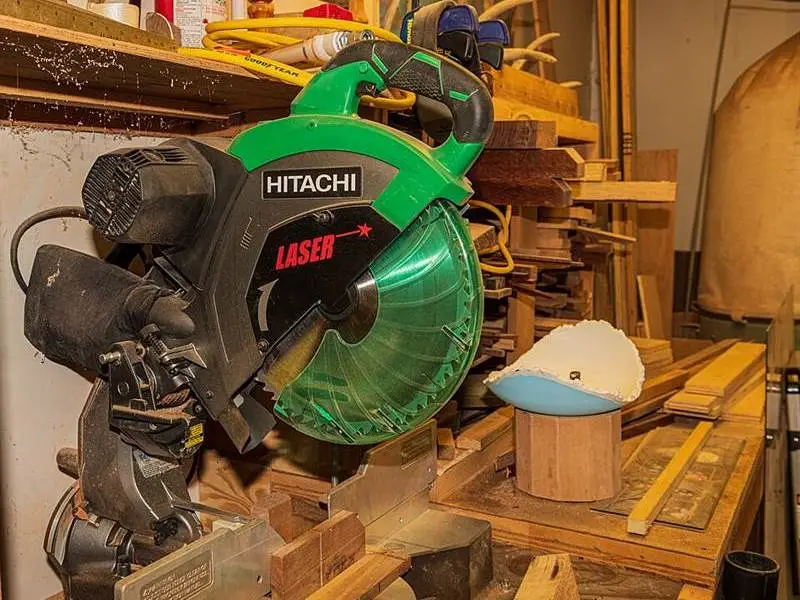
| Miter saw, 10" | 1,800 | 3,300 | 5,100 | Lowe's |
| Table saw, 10" | 2,000 | 2,000 | 4,000 | Lowe's, Generac |
| Table saw | 1,800 | 2,500 | 4,300 | Champion |
| Reciprocating saw | 960 | not listed | 960 | Lowe's, Generac |
| Reciprocating saw | 1,000 | not listed | 1,000 | Champion |
| Hand drill, 1/2" | 600 | 900 | 1,500 | Lowe's, Generac |
| Drill, corded | 600 | 850 | 1,450 | Champion |
| Hammer drill | 1,000 | 3,000 | 4,000 | Champion |
| Angle grinder | 800 | 2,400 | 3,200 | Champion |
| Bench grinder, 8" | 1,400 | 1,100 | 2,500 | Lowe's |
| Belt sander, 3" | 1,200 | 2,400 | 3,600 | Lowe's, Generac |
| Air compressor, 1/2 HP | 1,000 | 2,000 | 3,000 | Generac, Lowe's |
| Air compressor, 1 HP | 1,400 | 3,600 | 5,000 | Lowe's |
| Airless paint sprayer, 1/3 HP | 600 | 1,200 | 1,800 | Lowe's |
| Quartz halogen work light | 1,000 | none | 1,000 | Lowe's, Generac |
About the sources. Lowe's and Generac list "additional starting watts." Champion's flyer calls its column "starting watts," but its method adds the single highest figure on top of total running watts, so we treat it as additional too. Our inverter and generator guides use the same rows.
Charts show typical tools. Your tool's nameplate, or a watt meter, beats any chart.
Print this page for the shop wall: the table fits one sheet.
How to read the chart
- Find your tool. If two rows match, the charts disagree. Use the higher numbers to be safe.
- Running watts is the steady draw once the motor is up to speed.
- Additional starting watts is the extra spike for a second or so at startup. "Not listed" means the chart gives no figure, not that the tool has no spike.
- Total starting watts is what you'd need if that tool were the only thing running.
Sizing a generator or inverter with this chart
This is the method in the Lowe's, Generac and Champion charts:
- Add the running watts of everything you'll run at the same time.
- Find the one tool with the biggest additional starting watts. Add it to the running total. Only one motor usually starts at a time.
- Compare the running total with the generator's running watts, and the starting total with its starting (surge) watts.
Worked example: a small jobsite
Circular saw 1,400 + halogen work light 1,000 + 1/2" drill 600 = 3,000 W running. Biggest additional start: the circular saw, 2,300 W. Total to start: 3,000 + 2,300 = 5,300 W.
Our calculators add headroom: running × 1.2 and starting × 1.1, rounded up to the next 100 W. These margins are our estimates, not a maker's rule. That gives 3,600 W running and 5,900 W starting.
Worked example: one miter saw on an inverter
Running 1,800 W. Total to start 5,100 W. With our headroom: continuous 1,800 × 1.2 = 2,200 W (rounded up) and surge 5,100 × 1.1 = 5,610, so 5,700 W. That's a big inverter for one saw. Check that its surge rating holds long enough for a motor to start.
Run your own list through the generator wattage calculator or the inverter size calculator. Both use this chart and the same math.
From the nameplate: watts = amps × volts
US corded tools list amps at 120 V. Multiply to get the most the tool should draw:
| Nameplate amps | Max watts at 120 V |
|---|---|
| 5 A | 600 W |
| 7 A | 840 W |
| 10 A | 1,200 W |
| 13 A | 1,560 W |
| 15 A | 1,800 W |
For example, DeWalt's DWE575 circular saw has a 15 A motor: 15 × 120 = 1,800 W. That's a safe ceiling for running watts. The nameplate doesn't give starting watts, so use a chart row or measure it. Our guide to measuring running and surge watts shows how.
13 amp vs 15 amp tools
The amp number is the tool's maximum rated draw, not a different kind of outlet. At 120 V:
- A 13 A tool can draw up to 1,560 W.
- A 15 A tool can draw up to 1,800 W.
On a generator or inverter, plan for the 15 A tool's higher draw. Both plug into a standard 120 V outlet.
How many watts does a "skill saw" use?
"Skill saw" is what many people call any handheld circular saw, after the SKIL brand. So the circular saw rows apply: about 1,400 to 1,500 W running and 3,500 to 3,700 W total to start. Our old page said 500 to 1,500 W and 5 to 8 amps. That was too low for a corded 7-1/4-inch saw. DeWalt's DWE575, for example, is rated 15 A, or up to 1,800 W.
Household circuits and extension cords
- A 15 A circuit at 120 V carries about 1,800 W. A 20 A circuit carries about 2,400 W.
- A miter saw (1,800 W running) plus almost anything else on one 15 A circuit can trip the breaker. Spread big tools across circuits.
- A long or thin cord drops voltage, which makes a motor work harder. Use the extension cord gauge chart to pick the right cord.
Other ways to power tools away from the grid
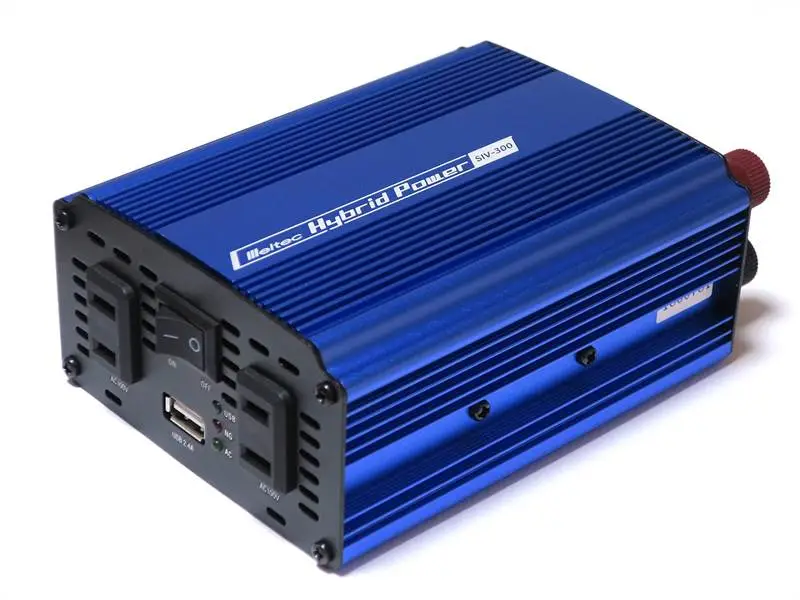
- Inverter in a truck: see what size inverter to run a circular saw and pure vs modified sine wave.
- Portable power station: see run power tools from a power station.
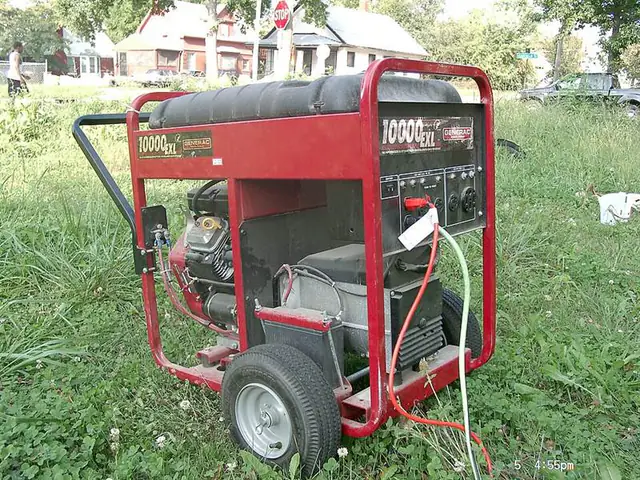
- Generator: see what size generator do I need and what a 10,000-watt generator will run.
More power guides are in the electrical hub.
Calculator
Inverter size calculator for power tools →
Same formulas as this page, for your own numbers.
What you'll need
- Your tool's nameplate or manual: Amps or watts at 120 V
- Plug-in watt meter: To measure running watts yourself
- Generator or inverter spec sheet: Running and starting (surge) ratings
Key takeaways
- Running watts keep a tool going. Additional starting watts are the short extra burst a motor needs to start. Total starting watts = running + additional.
- Charts disagree. Lowe's and Generac list a 7-1/4-inch circular saw at 1,400 W running + 2,300 W to start; Champion lists a circular saw at 1,500 W + 2,000 W.
- From a nameplate: watts = amps × 120 V. A 15 A saw can draw up to 1,800 W, a 13 A saw up to 1,560 W. Nameplates don't list starting watts.
- To size a generator or inverter, add the running watts of everything on at once, then add the single biggest additional starting figure.
- A 15 A, 120 V household circuit carries about 1,800 W. Two big tools on one circuit can trip the breaker.
Questions people ask
How many watts does a circular saw use?
Wattage charts list a 7-1/4-inch circular saw at 1,400 to 1,500 W running. Starting takes 2,000 to 2,300 W more, for 3,500 to 3,700 W total for a moment. A 15 A saw can draw up to 1,800 W at full load.
How many watts does a Skil saw use?
The same as any 7-1/4-inch circular saw, since many people call any circular saw a 'skill saw.' Charts list about 1,400 to 1,500 W running and 3,500 to 3,700 W to start. Check the amps on your saw's label and multiply by 120.
How many watts does a miter saw use?
Lowe's lists a 10-inch miter saw at 1,800 W running plus 3,300 W to start, or 5,100 W total. That's one of the hardest tools to start on a small generator.
How many watts does a table saw use?
Lowe's and Generac list a 10-inch table saw at 2,000 W running plus 2,000 W to start (4,000 W total). Champion lists a table saw at 1,800 W running plus 2,500 W to start (4,300 W total).
How many watts does a drill use?
A corded 1/2-inch drill is listed at 600 W running plus 850 to 900 W to start. A hammer drill is listed at 1,000 W running plus 3,000 W to start.
What's the difference between a 13 amp and a 15 amp tool?
The maximum draw. At 120 V, a 13 A tool can pull up to 1,560 W and a 15 A tool up to 1,800 W. Plan generator or inverter size on the higher number.
Can I run two power tools on one outlet?
Two small ones, maybe. A 15 A circuit at 120 V carries about 1,800 W. A circular saw and a shop light can trip it. Run big tools on separate circuits, and use the right cord gauge.
Do cordless tools use less power?
They run from their battery, so the only wall load is the charger. Check the charger label for its watts. See charge tool batteries in the car.
Sources
- Portable generator wattage chart: jobsite tools, running and additional starting watts (Lowe's)
- GP Series portable generator brochure: wattage reference chart, running and additional starting watts (Generac)
- Choosing a generator: quick reference wattage, job site tools (Champion Power Equipment)
- What size generator do I need? Sizing method: total running watts plus the largest starting load (Generac)
- DWE575 7-1/4 in. lightweight circular saw: 15 A motor (DeWalt)
Change log: Nov 6, 2026: New data page. Folds in the archived posts 'How many watts does a skill saw use' (its 500–1,500 W and 5–8 A figures were wrong) and '13 amp vs 15 amp' (its 13 A = 1,300 W math was wrong). Every row now has a source and a running / additional / total label.