What is a trim saw and when would you use one?

In this guide
A trim saw is a compact circular saw, usually with a blade from 4-1/2 to 5-3/8 inches across. It does the light cutting a full-size saw does, in a smaller, lighter tool. Makita calls its 5-3/8-inch model a "circular trim saw" and sells it to finish carpenters and woodworkers.
This guide is part of our saws and cutting hub. For all the round-blade saw names, see what is a buzz saw.
What a trim saw does
A trim saw is a circular saw shrunk down. It has the same parts: a blade guard, a base (shoe) that sets the depth and bevel, and a trigger handle. The small blade makes three things easier:
- Weight. Makita's 5-3/8-inch saw is about 6 pounds with a battery. It's easy to hold up for overhead cuts and to carry up a ladder.
- Control. A small base and blade are easier to follow a line on thin stock.
- Reach. It fits in cabinets, between studs and overhead where a big saw is awkward.
When would you use a trim saw?
- Trim and 1x boards: cutting casing, baseboard stock and 1x lumber to length or width.
- Plywood, paneling and OSB: DeWalt says its 4-1/2-inch saw cuts up to 369 linear feet of 3/4-inch OSB on one 5.0 Ah battery.
- Overhead and tight spaces: Makita lists overhead cuts and cuts in tight spaces as uses for its trim saw.
- Flooring and small fixes: trimming laminate planks or shelf boards on site. Our quarter round without a nail gun guide is one job where a small saw helps.
- Thin plastic sheet: with the right blade. See how to cut plexiglass with a circular saw.
Sizes and specs
| Saw | Blade | Max depth at 90° | Max depth at 45° | Speed |
|---|---|---|---|---|
| DeWalt DCS571 ATOMIC 20V | 4-1/2 in | Cuts 2x material | Cuts 1x material | 4,500 rpm (DeWalt graphic) |
| Makita XSS03Z 18V LXT | 5-3/8 in, 5/8 in arbor | 2 in | 1-3/8 in (bevels to 50°) | 3,600 rpm |
| Milwaukee 2530-20 M12 FUEL | 5-3/8 or 5-1/2 in, 10 mm arbor | 1-5/8 in | 1-1/8 in | 3,600 rpm |
Look at the arbor column. Makita uses a 5/8-inch arbor and Milwaukee's M12 saw a 10 mm arbor. Trim saw blades are not one size fits all, so buy blades for your exact model.
If you plan a full day on batteries, our battery runtime calculator helps you size the packs.
Trim saw vs similar tools
| Tool | Best for | Not the same because |
|---|---|---|
| Trim saw | Light cuts, easy control, overhead work | Shallow depth; can't bevel 2x lumber |
| 7-1/4-inch circular saw | Framing, 2x lumber, bevels through 2x | Heavier; tiring overhead |
| Miter saw | Accurate repeat crosscuts and miters in trim | Stays on a stand; you bring the trim to it |
| Track saw | Long, splinter-free cuts in sheet goods | Needs a rail; bigger and costlier |
| Panel saw | Breaking down full sheets in a shop | A large shop machine |
For the bench options, see corded vs cordless miter saw and what is a panel saw. More saw types are in types of saws.
The other "trim saws"
- Trim blade. A fine-tooth finish blade for trim, on any saw. Milwaukee describes "finish and trim" blades as made for crosscuts and miters where a very smooth cut is needed.
- Lapidary trim saw. In rock and gem work, a trim saw is a small bench saw with a diamond blade. It trims stone slabs into smaller pieces. Lapidary suppliers like Kingsley North sell them. It isn't a woodworking tool.
How to choose
- Mostly trim, shelves, plywood and repairs: a 4-1/2 to 5-3/8 inch trim saw on a battery platform you already own.
- Framing or decks: a 7-1/4-inch circular saw. A trim saw is too shallow for bevels in 2x stock.
- Many repeat miters in trim: a miter saw.
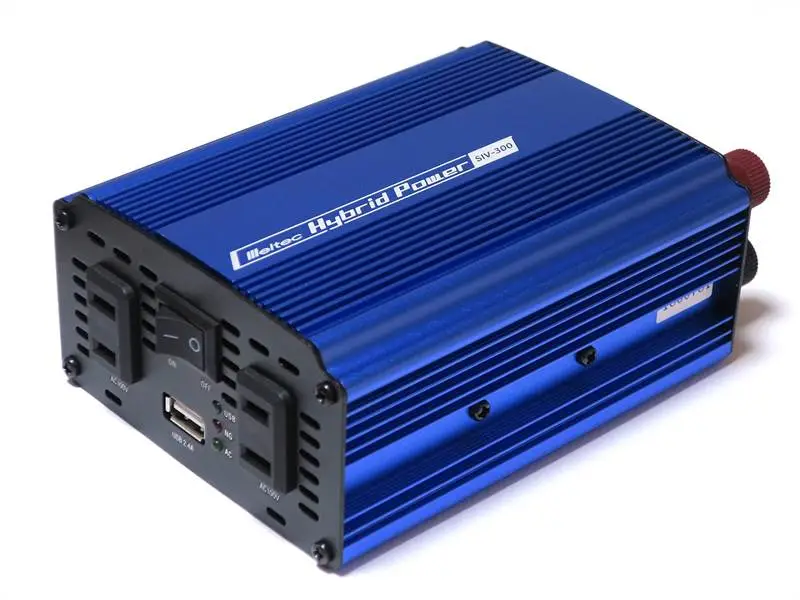
- Running off a vehicle? If you run a corded saw on an inverter, see what size inverter to run a circular saw.
The wood and MDF page lists the right blade and screws for each sheet good.
Trim saw safety
A small saw is still a circular saw, and it can kick back. Kickback is a sudden jump of the saw toward you when the blade pinches or binds. Milwaukee's manual gives these rules:
- Set the blade so it sticks out only 1/8 to 1/4 inch below the work.
- Support large panels on both sides of the cut, so they don't sag and pinch the blade.
- Keep a firm grip with both hands on the saw. If both hands are on the saw, the blade can't cut them.
- Keep the blade straight in the cut, and let it stop before you lift the saw out.
More on causes and fixes is in our circular saw kickback guide.
Key takeaways
- A trim saw is a compact circular saw. Makita's 5-3/8-inch model cuts 2 inches deep at 90 degrees and weighs about 6 pounds with a battery.
- Use it for trim, 1x boards, plywood, paneling, OSB and thin sheet, and for overhead or tight-space cuts.
- It is not a framing saw. It can't bevel through 2x lumber like a 7-1/4-inch saw can.
- Blades are small and arbors vary (5/8 inch on Makita, 10 mm on Milwaukee's M12). Buy blades for your exact saw.
- In rock shops, a 'trim saw' is also a small diamond saw for trimming stone slabs.
Questions people ask
When would you use a trim saw?
When a full-size circular saw is too heavy or too much: cutting trim, 1x boards, plywood, paneling and thin sheet; cutting overhead; and cutting in tight spaces. Makita sells its 5-3/8-inch trim saw for finish carpenters and for overhead and tight-space cuts in light material.
What is the difference between a trim saw and a circular saw?
A trim saw is a circular saw, just smaller. It takes a 4-1/2 to 5-3/8 inch blade instead of 7-1/4 inch, so it is lighter and cuts less deep. Makita's trim saw cuts 2 inches at 90 degrees and 1-3/8 inches at 45, enough for trim and plywood but not for bevels in 2x lumber.
Can a trim saw cut a 2x4?
Straight across at 90 degrees, yes. A 2x4 is 1-1/2 inches thick, and Makita's and Milwaukee's trim saws cut deeper than that. At a 45-degree bevel, no: Makita's 1-3/8 inches and Milwaukee's 1-1/8 inches are less than 1-1/2. DeWalt rates its 4-1/2-inch saw for 90-degree cuts in 2x and 45-degree cuts in 1x.
What blade is best for cutting trim?
A fine-tooth finish blade. Milwaukee's manual describes finish and trim blades as made for crosscuts and miters where a very smooth cut is needed. Match the blade's diameter and arbor to your saw.
What is a lapidary trim saw?
A small bench saw with a diamond blade, used by rock hounds and jewelers to trim stone slabs into pieces for cabochons. It has nothing to do with wood trim.
Sources
- Makita XSS03Z 18V LXT 5-3/8 in. circular trim saw: specs and intended use
- DEWALT DCS571B ATOMIC 20V MAX 4-1/2 in. circular saw: product page
- Milwaukee 2530-20 M12 FUEL 5-3/8 in. circular saw operator's manual: specs, blade types, depth setting, kickback
- OSHA 29 CFR 1910.243(a)(1): guards on portable circular saws
- Kingsley North: lapidary trim saws
Change log: Nov 6, 2026: Rewritten from the 2023 archive post and merged with 'when would you use a trim saw' (that post's text was about lawn mowers, so nothing was kept). Removed the false claims that a trim saw is 'also known as a coping saw or flush-cut saw' and 'produces very little dust and noise'; added Makita, DeWalt and Milwaukee specs, the 2x4 bevel limit, blade arbor note and the lapidary meaning.