Can you use mulching blades with side discharge?
In this guide
Bench test (planned)
The planned test runs three blades on the same mower and lawn strip, each with the side chute open and then plugged, first in normal grass cut by one-third. Results will be added here when the test is done.
The rest of this page covers what blade and mower makers say, plus university turf guidance. More mower help is in the outdoor power hub.
Why mulching blades still side-discharge
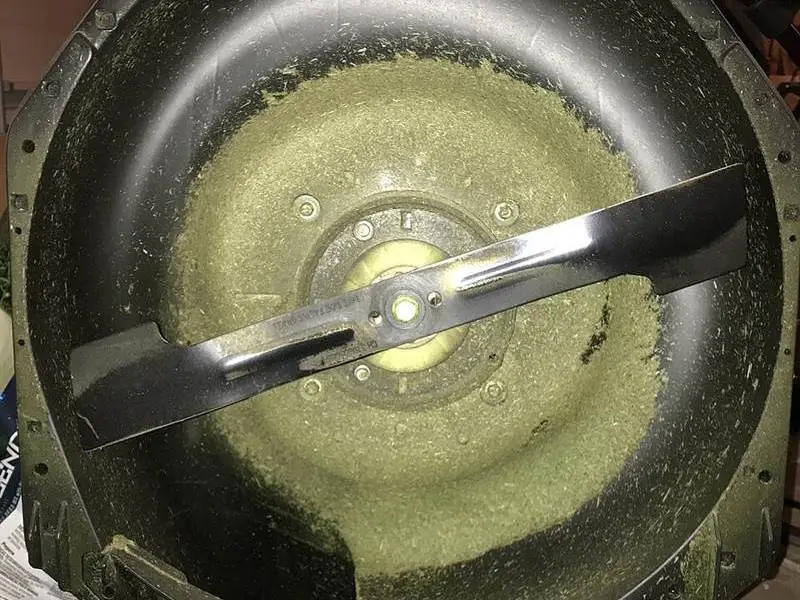
A mower blade does two jobs. It cuts, and its curved back edge (the "lift" or "sail") pulls air up. That airflow stands the grass up and pushes clippings out the chute or into the bag.
- High-lift blades have a tall sail and push the most air. They are best for bagging and side discharge.
- Mulching blades have a curved, often extra-sharp edge that recuts clippings under the deck. They move less air.
So a mulching blade on an open deck still throws grass out the side, just with less force. Fisher Barton, a blade maker, puts it this way: mulching blades are "not as efficient as high-lift blades at discharging", but they can mulch, discharge and bag. Oregon makes the same claim for its Gator 3-in-1 blades. John Deere says the blades in its 42-inch mulch kit can also side-discharge.
Blade types compared
| Blade | Airflow | Best for | With side discharge |
|---|---|---|---|
| Standard (medium-lift) | Medium | Everyday mowing | Works well |
| High-lift | High | Bagging, tall grass, leaves | Works best; needs more engine power |
| Mulching | Low to medium | Recutting clippings with the chute closed | Works, but may clump in tall or wet grass |
| Gator / 3-in-1 | Medium to high, with teeth | Mulching, bagging or discharge | Works; a good all-round pick |
For the full lineup with shapes and part numbers, see our mower blade types guide.
Open chute or closed?
To side-discharge
Leave the chute open, with the deflector down and in place. Toro's manuals are blunt about this: never run the mower without the side-discharge deflector or chute in place and working. Without it, the blade can throw rocks and sticks at you or anyone nearby.
To mulch
Close the chute. Most decks take a mulch plug or a cover plate sold for that model. Some mulch kits also add baffles under the deck. With the chute closed, clippings stay under the deck long enough to be cut again and drop into the lawn.
Running mulching blades with the chute open is a halfway setup. You'll get slightly finer clippings, but most of them still leave the deck.
When to mulch and when to side-discharge
Kansas State's turf guide says to mow often enough that you never remove more than one-third of the grass height at once. Do that, and short clippings fall out of sight and break down fast. UGA Extension says clippings can supply up to 20 percent of a lawn's nitrogen.
- Mulch when the grass is dry and you've kept to the one-third rule.
- Side-discharge when the grass is tall, thick or wet. Toro's Super Recycler manual says to use side discharge for very tall grass.
- Bag when you want a clean look, or there are lots of leaves or weed seeds.
Our mulching vs bagging vs side discharge guide compares all three in depth.
How to fit mulching blades
- Make it safe. Turn the engine off, pull the spark plug wire (or remove the battery on a battery mower), and let the engine cool.
- Tip it the right way. Tip a walk-behind mower the way your manual says, so oil and fuel don't leak.
- Block the blade. Wedge a block of wood between the blade and the deck so it can't turn.
- Loosen the bolt. Most blade bolts loosen counterclockwise. If it won't budge, see mower blade bolt stuck.
- Check the new blade. It must match the old one's length and center-hole shape. The part number in your manual is the safest match.
- Fit it the right way up. The sail (curved edge) points up toward the deck. See which way does a mower blade go.
- Torque the bolt to the value in your manual.
- Fit the mulch plug if you want to mulch, or leave the chute deflector down to side-discharge.
If it's not working
- Clumps behind the mower. The grass is too tall or wet. Raise the deck, mow more often, or switch to side discharge.
- Engine bogs. Mulching with the chute closed is hard work for the engine. Slow your walking speed or raise the deck.
- Streaks or ragged tips. The blade is dull. Mulching blades need a sharp edge to recut. See how to sharpen mower blades.
- Still not sure about deck size for your yard? The mower size calculator helps you pick one.
What you'll need
- Mulching or 3-in-1 blade(s) listed for your deck: Match the part number in your manual
- Mulch plug, cover plate or mulch kit: Only if you want to close the chute
- Socket wrench and a block of wood: To hold the blade while you loosen the bolt
- Heavy gloves: Blade edges are sharp, even dull ones
- Torque wrench: Tighten to the torque in your manual
Key takeaways
- Mulching blades will side-discharge. Blade makers sell them as able to mulch, bag and discharge, but they move less air than high-lift blades.
- For real mulching, close the side chute with the mulch plug or cover made for your deck. An open chute lets most clippings escape.
- In tall, thick or wet grass, mulching blades clump. Switch to side discharge with a high-lift or standard blade, or mow more often.
- Only fit a blade listed for your mower: same length, center hole and lift. The wrong blade can hit the deck or come loose.
- Mow often enough to cut no more than one-third of the grass height. That one rule makes any blade mulch better.
Questions people ask
Can you use mulching blades with a bagger?
Yes. Blade makers like Fisher Barton say mulching blades can mulch, discharge and bag. They lift less air than high-lift blades, so the bag fills more slowly and may not pack full. For lots of bagging, a high-lift blade works better.
Mulching vs side discharge: which is better?
Mulching returns finely cut clippings to the lawn, which feeds it and saves bagging. Side discharge handles tall, thick or wet grass better and is faster. Many people mulch most of the season and side-discharge after a long gap between mows.
When should you use mulching blades?
When the grass is dry and you mow often enough to cut no more than one-third of its height. That's when clippings are short enough to recut and drop out of sight.
Do I need a mulching kit, or just blades?
For proper mulching, you need the chute closed, so a kit (blades plus a plug or cover) works best. Blades alone on an open deck cut a bit finer but still throw most clippings out the side.
Can I mix a mulching blade and a high-lift blade on one deck?
Don't, unless your mower maker lists that combination. Multi-blade decks are designed for matched blades. Mixed blades can fight each other's airflow and leave streaks.
Sources
- High-lift vs mulching blades: which is right for you? (Fisher Barton, blade manufacturer)
- Gator Mulcher 3-in-1 blades: bagging, mulching or side-discharging (Oregon Products via Green Industry Pros)
- BM20008 Mulch Kit, 42C-inch deck: blades also side-discharge (John Deere)
- Toro side-discharge kit operator's manual: never operate without the deflector or chute
- Toro Super Recycler 20797 operator's manual: side-discharging very tall grass
- Recycling grass clippings, MF2110 (Kansas State University Research and Extension)
- Should you bag your grass clippings? (UGA Extension, Madison County)
Change log: Nov 6, 2026: Rewritten from the archived post. Fixed the claim that mulching blades are made for side discharge; added the 'with limits' verdict, blade-type table, chute safety rule and extension mowing guidance.